Brooks Falls Bear Viewing in Katmai National Park: How to Plan Your Visit

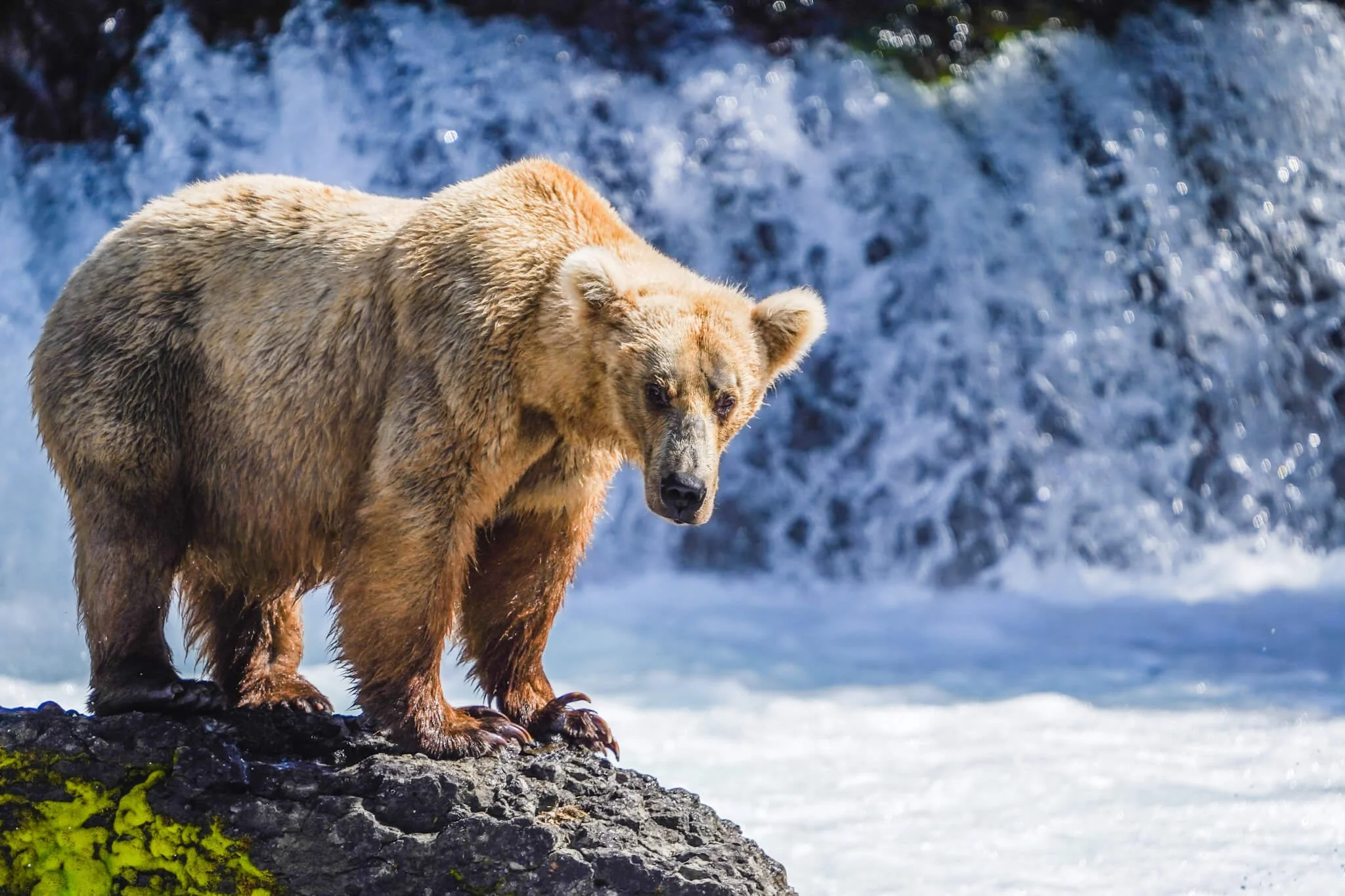
Two brown bears catching fish at the top of Brooks Falls.
If you’ve ever seen a photo of a brown bear standing at the top of a waterfall, waiting for a salmon to jump upstream, there’s a good chance it was taken at Brooks Falls in Katmai National Park. During the summer, large numbers of brown bears gather along the Brooks River to feed on salmon, making this one of the best places in Alaska to see bears in the wild.
Brooks Falls is a remote destination, and getting there takes a little more planning than many of the places you’ll visit in Alaska. But for travelers who want to see brown bears up close in their natural environment, it can be an incredible experience.
In this guide, we’ll explain what bear viewing at Brooks Falls is like, how to get there, when to visit, what you need to know about safety, and how to fit a visit into your Alaska itinerary.
Why Visit Brooks Falls for Bear Viewing?
Brooks Falls is one of the best-known bear-viewing destinations in Alaska for good reason. During the summer salmon runs, brown bears gather along the Brooks River to feed, and Brooks Falls creates a natural obstacle that makes salmon easier for bears to catch.
The experience is different depending on when you visit. In July, salmon are actively moving upstream, and bears often gather at the falls to fish. By September, many salmon have spawned and are dying, bringing bears back to the river in large numbers, although they are more often found farther downstream.
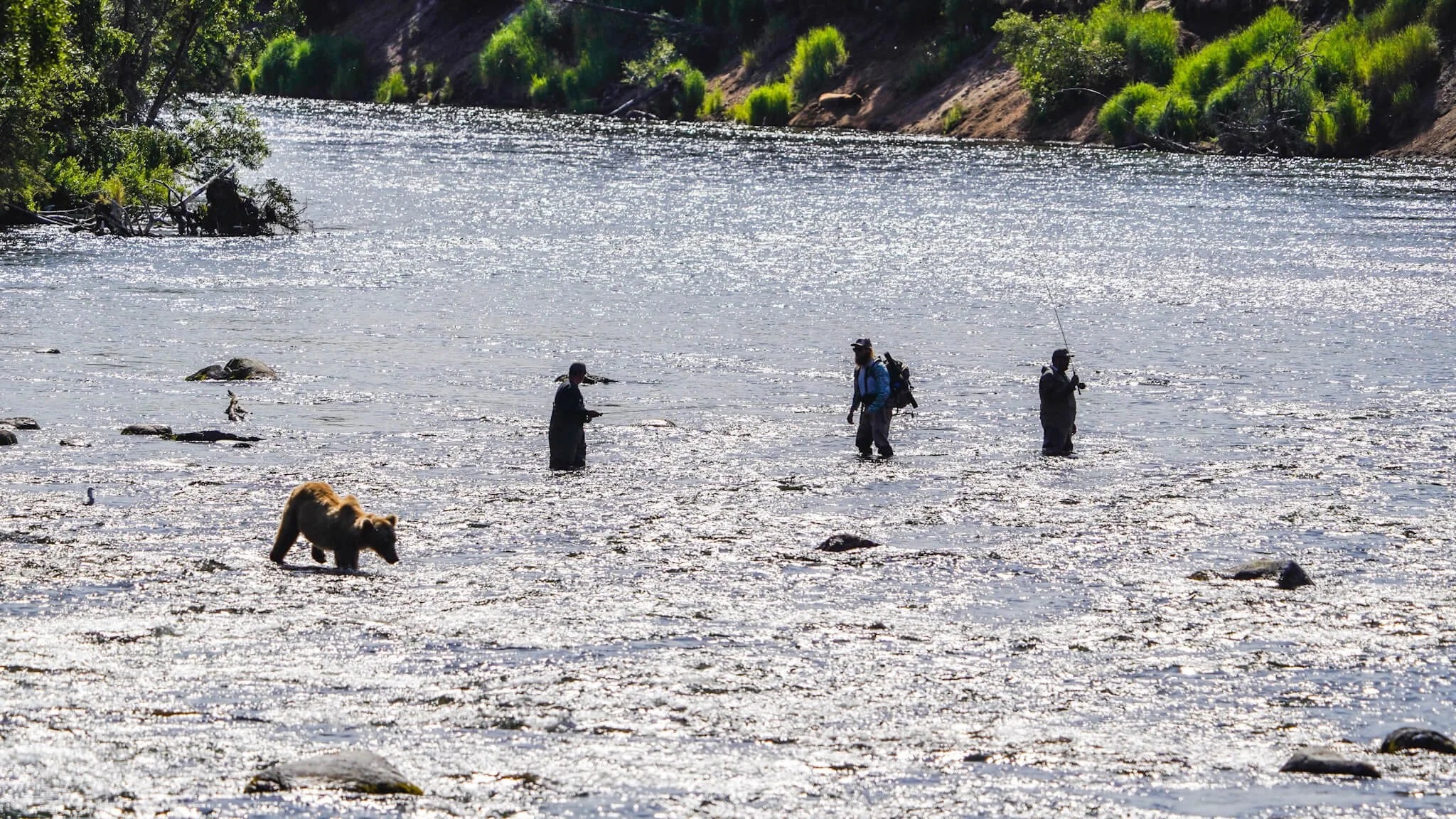
What makes Brooks Falls particularly interesting is that you aren't simply watching bears from a distant overlook. You walk through their habitat to reach the viewing areas, and it is common to encounter bears along the way. The bears are accustomed to people being in the area, but they are still wild animals, and visitors need to follow the park's safety rules and give them plenty of space.
What Are Brooks Falls and Brooks Camp?
Brooks Falls is located along the Brooks River in Katmai National Park and Preserve, on the Alaska Peninsula. The falls are about six feet high and create a temporary barrier for migrating salmon, concentrating fish in an area where bears can catch them more easily.
Brooks Camp is the small visitor area that serves as the main access point for visiting Brooks Falls. There are no roads connecting Brooks Camp to the rest of Alaska, so visitors arrive by small aircraft or other air transportation. Once you arrive, you'll attend a required bear-safety briefing before heading out into the area.
The camp has a visitor center, ranger station, restrooms, viewing platforms, trails, and other basic visitor services. It feels very different from the towns and destinations you'll visit elsewhere in Alaska, which is part of what makes a trip here special.
When Is the Best Time to Visit Brooks Falls?
If seeing bears at Brooks Falls is your main goal, July is generally the best month to visit. Bears gather along the Brooks River as sockeye salmon migrate upstream, and mid-July typically brings the largest concentration of bears. This is also the busiest time to visit, particularly at the Falls Platform.
September can also be an excellent time for bear viewing, although the experience is different. Bears return to the Brooks River to feed on dead and dying salmon, and bear numbers are again high. Most of the activity is generally farther downstream rather than directly at Brooks Falls.
August is not our first choice if bear viewing is the main reason for your visit. Salmon are still in the river, but they are more difficult for bears to catch, and bear activity at Brooks River can be quite low. There are even days when visitors may not see any bears at Brooks Camp.
July vs. September
If you're deciding between July and September, think about what kind of experience you're hoping for:
July: More bears at Brooks Falls, active salmon migration, and a greater chance of watching bears fishing at the falls. It is also the busiest time of year, and you should expect crowds and potentially a wait for the Falls Platform.
September: Bears are again present in high numbers, but many are concentrated along the lower Brooks River as they feed on spawned-out salmon. The bears are also typically larger and have fuller coats than they do earlier in the summer. The weather is cooler and less predictable, and flightseeing and bear-viewing tours are more likely to be canceled or delayed because of weather. If you're visiting in September, we recommend having some flexibility in your itinerary so there is an opportunity to reschedule if your flight cannot operate.
For most travelers whose main goal is to watch bears fishing at Brooks Falls, we would plan around July if the rest of their itinerary allows for it.
How to Get to Brooks Falls

There are no roads to Brooks Falls. To visit, you first need to get to Brooks Camp, which is located on the shore of Naknek Lake in Katmai National Park. Most visitors make the trip as a day trip from Anchorage or Homer, while another option is to fly to King Salmon and arrange transportation from there.
Day Trip from Anchorage or Homer
For most travelers, the simplest option is to book a guided day trip from Anchorage or Homer. These trips typically include a small-plane flight directly to Brooks Camp, time to explore the area and view the bears, and the return flight later that day.
Flying from Anchorage is the most common option and makes Brooks Falls possible even if you don't have enough time to spend several nights in the Katmai area. There are also day trips from Homer, which can work particularly well if you're already spending time on the Kenai Peninsula.
The exact flight time, cost, and schedule depend on the company you book with and your departure point. Private charters are also available and can make sense for larger groups or travelers who want more flexibility.

Keep in mind: Weather can affect flights to Brooks Camp, particularly later in the summer. If your flight is canceled because of weather, it may not be possible to reschedule for another day. These trips often sell out well in advance, especially during the busiest bear-viewing periods. For that reason, we recommend understanding the cancellation policy when you book and, if possible, having some flexibility in your overall Alaska itinerary.
Fly to King Salmon
Another option is to fly from Anchorage to King Salmon and arrange transportation from King Salmon to Brooks Camp. Scheduled commercial flights operate between Anchorage and King Salmon, and several local operators provide air or water transportation onward to Brooks Camp.
This option can make sense if you're planning to spend more time in the Bristol Bay area or would prefer to arrange the transportation to Brooks Camp separately. However, it involves coordinating more than one part of the journey, so it isn't necessarily the simplest option for a traveler visiting Brooks Falls for just one day.
How We Would Plan It
For most of our clients, we'd look at a day trip from Homer or Anchorage first. Brooks Falls is a significant expense and takes most of a day, so we think it's best to look at the rest of your itinerary before deciding where to fit it in.
If bear viewing at Brooks Falls is one of your top priorities, we'd recommend booking well in advance and choosing your date carefully. Because these trips often sell out far ahead of time, a weather cancellation doesn't necessarily mean you can simply move your trip to the following day. It's one of the reasons we pay close attention to the timing of Brooks Falls when we're building an Alaska itinerary.

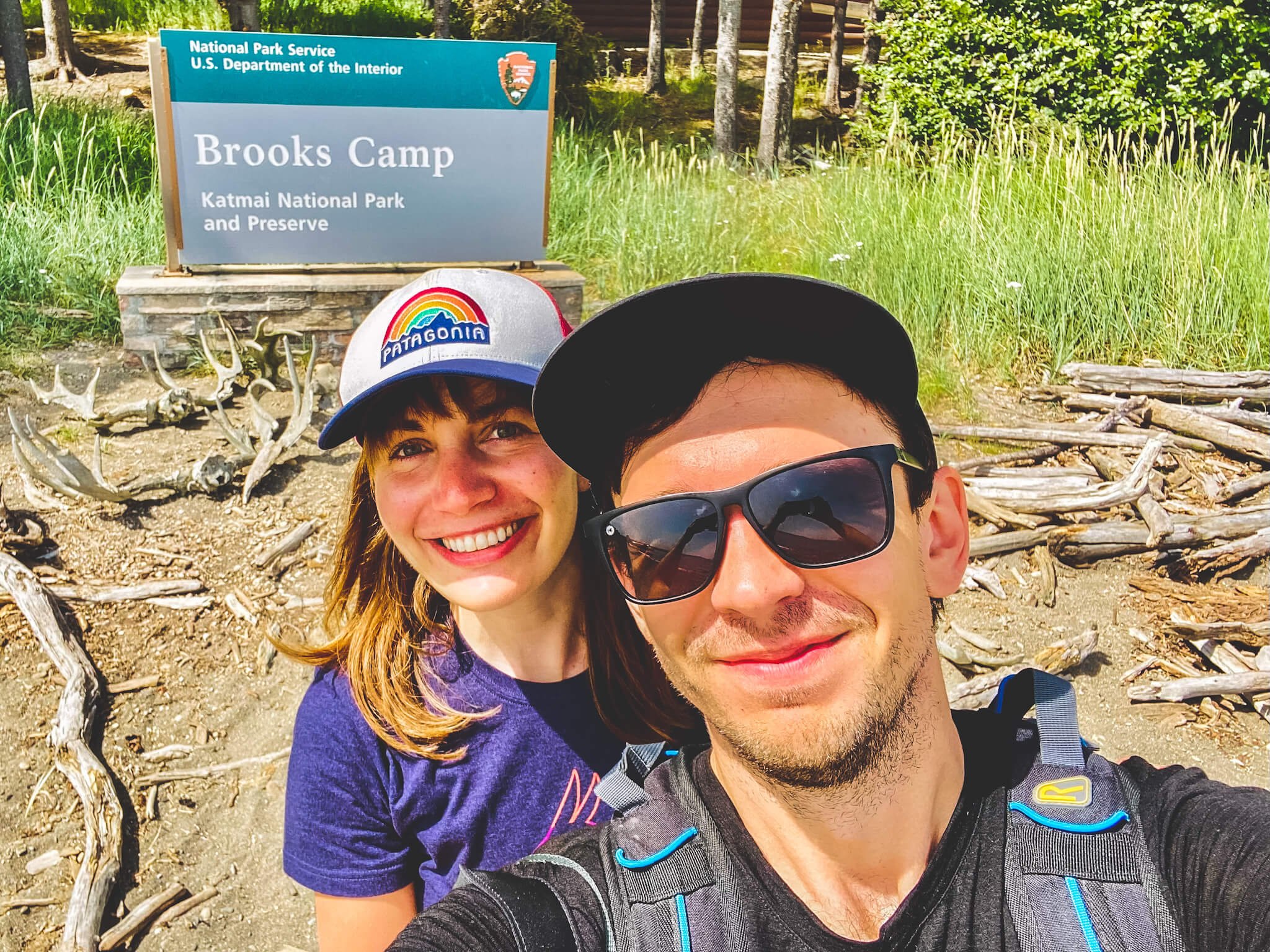
Top Left: Food storage closet Top Right: Designated eating area with electric fence Bottom Left: Damian with Brooks Camp sign Bottom Right: Pin from park rangers received after attending informational session
What Is the Bear Viewing Experience Like?

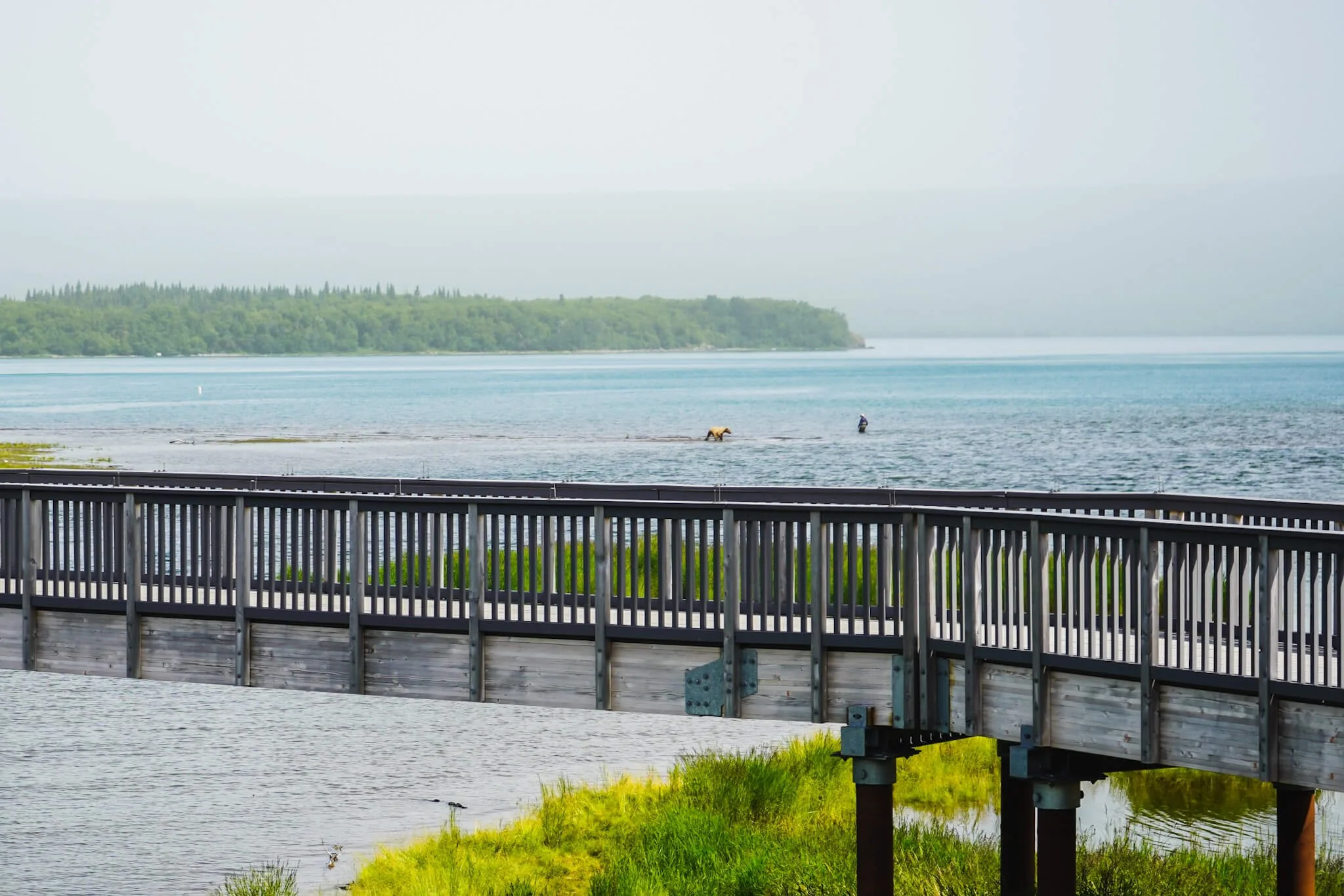
Once you arrive at Brooks Camp, you'll attend a required bear-safety briefing before heading out toward the viewing areas. The walk to Brooks Falls is about 2 miles round trip and is relatively flat, with sections of forest and elevated boardwalk.
Along the way, you may see bears walking along the river, resting near the trail, or crossing your path. Bears are used to people being in the area, but they are still wild animals, so you'll need to stay alert and follow the park's safety rules.
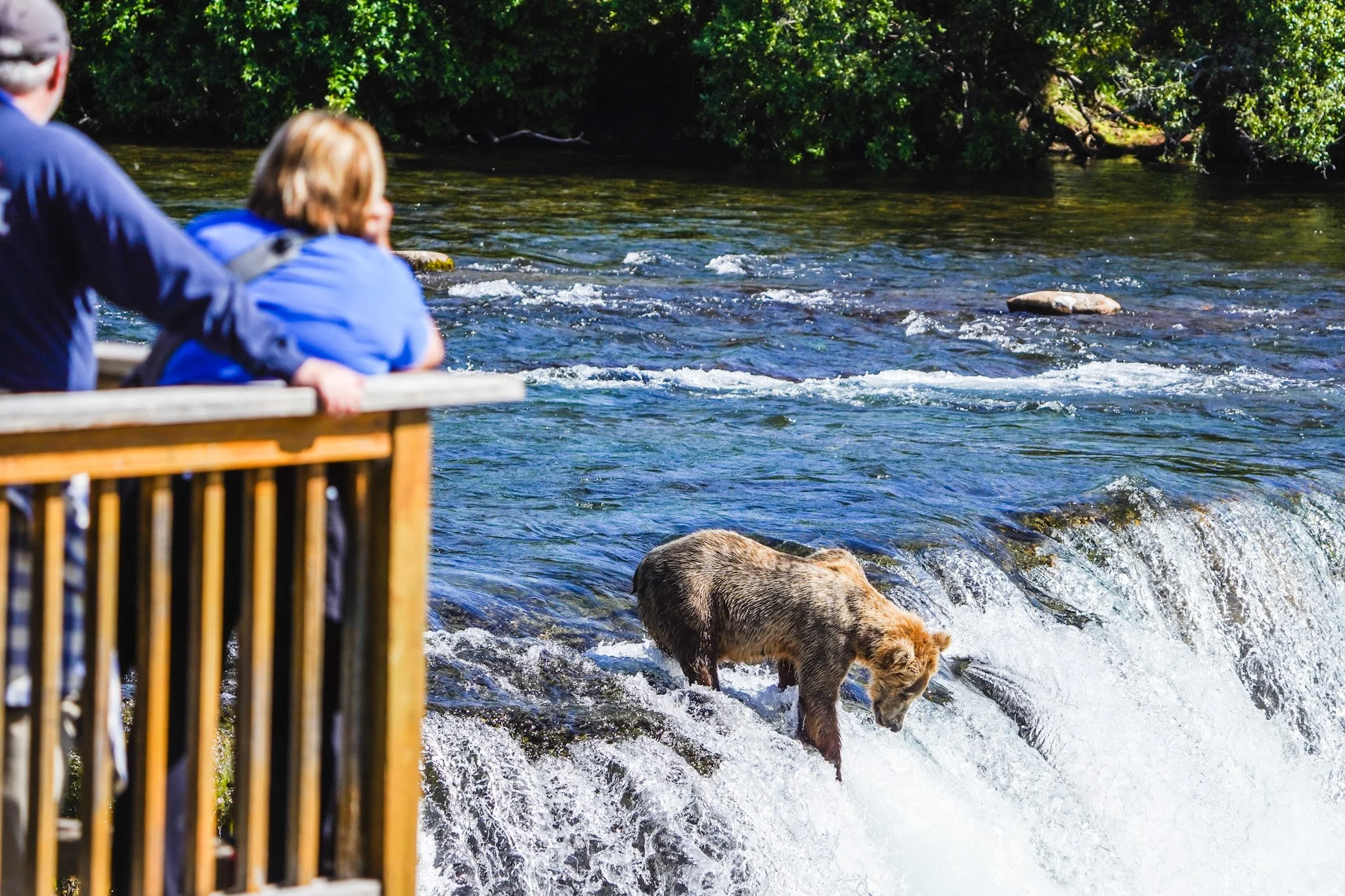
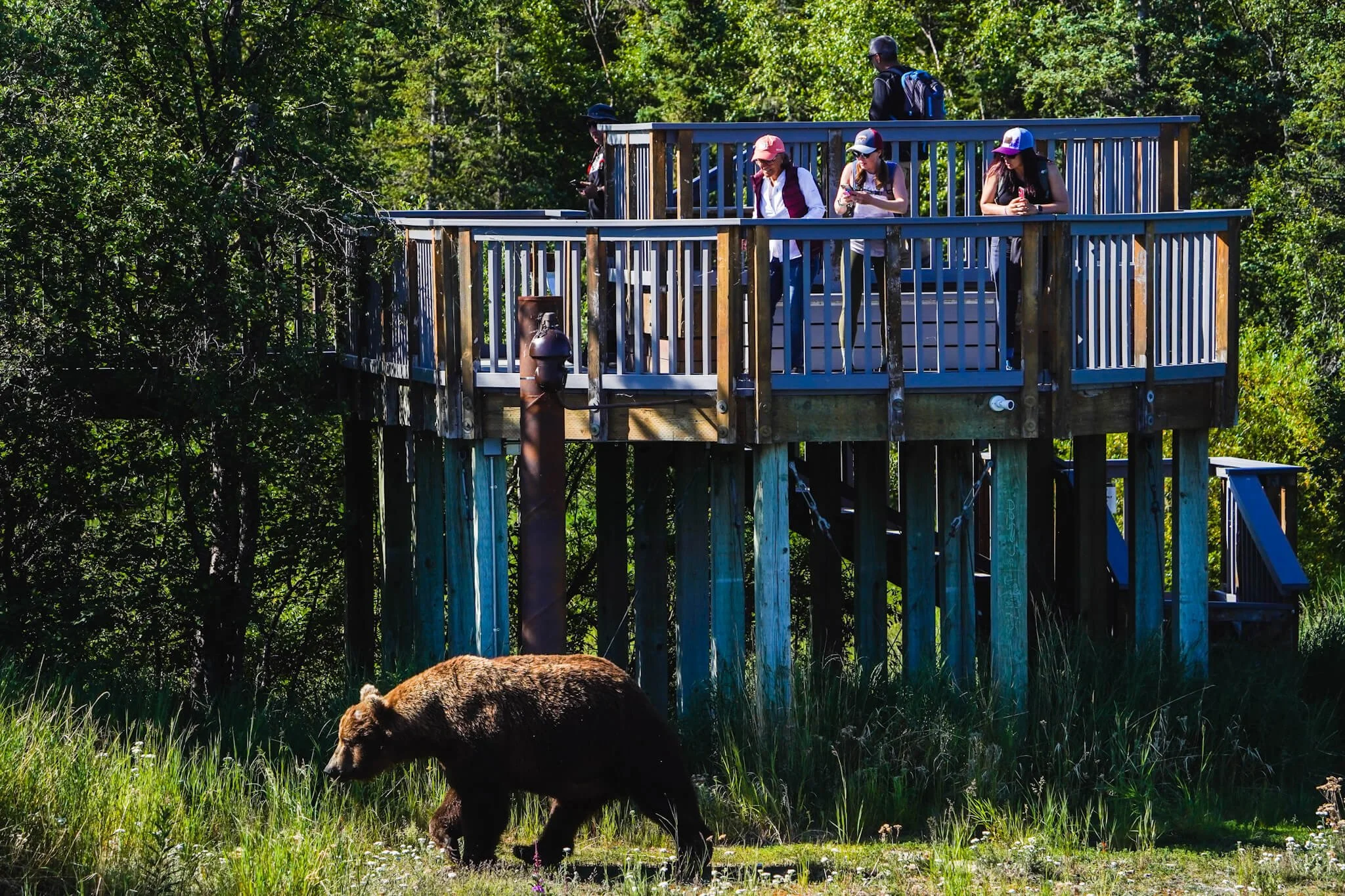
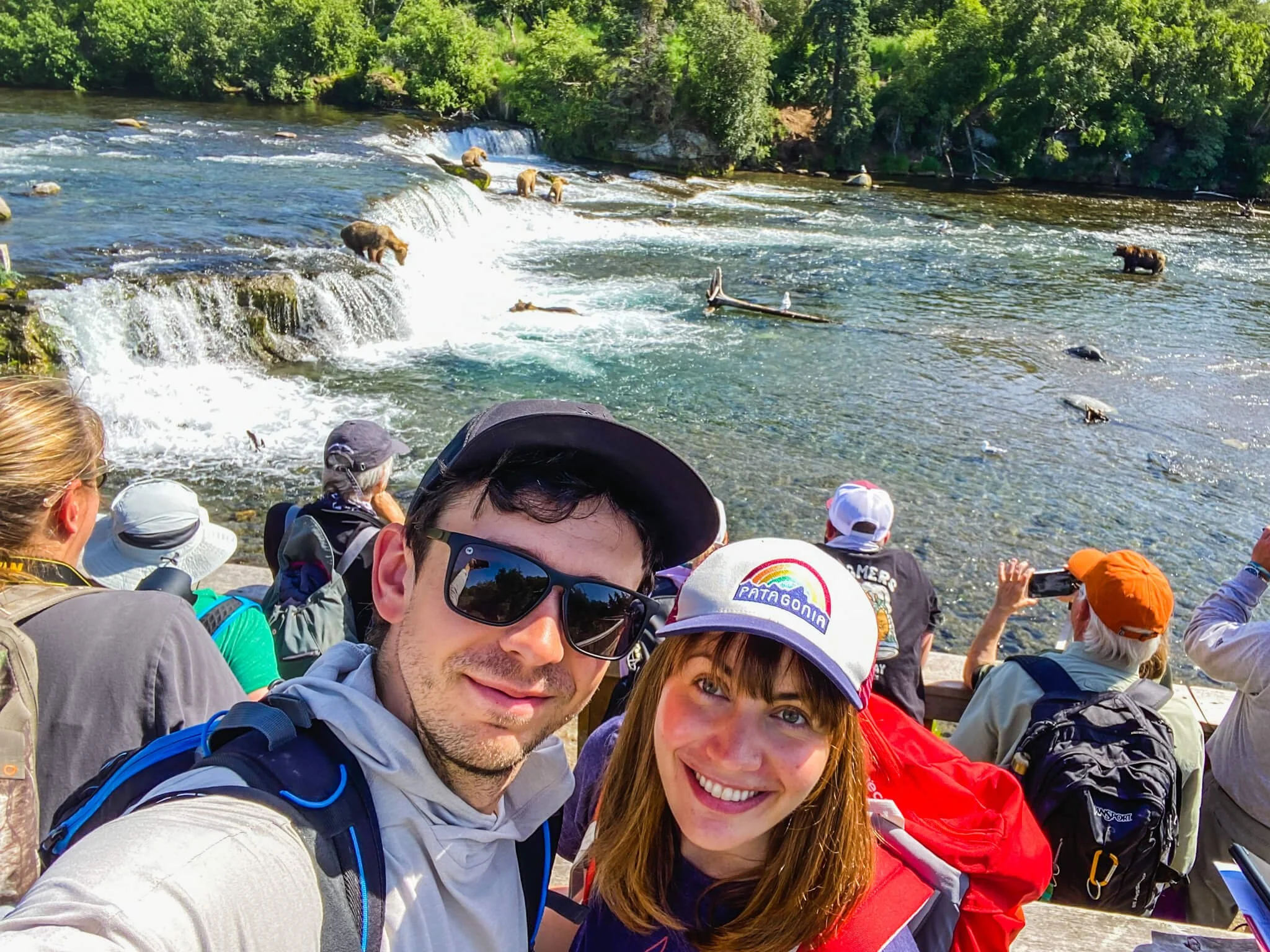
At Brooks Falls, the main viewing platform overlooks the river and waterfall where bears gather to fish for salmon. The two-level platform can fill up during busy periods, particularly in July, and rangers manage access when it reaches capacity. You may have to wait for your turn, but there is also a Riffles Platform farther along the river that offers another place to watch the bears.
The bears don't follow a schedule, so you may see several bears fishing at the falls, or you may arrive when they're resting or feeding elsewhere along the river. The experience isn't just about seeing a bear catch a salmon at the waterfall—the entire walk and time spent around Brooks Camp are part of the experience.

Bear Safety at Brooks Falls
Seeing bears is a normal part of visiting Brooks Camp, and you may encounter them along the trails, around the river, or near the viewing platforms. Remember that these are wild animals, so it's important to give them space and follow the park's safety rules.
Follow ranger instructions and pay attention during the required safety briefing.
Never approach or feed a bear. Let the bear decide how close it wants to be.
Keep food and trash secured in the designated storage areas.
Stay alert on the trails and be aware of bears around you.
We are guests in the bears' habitat, and following the park's guidelines helps keep both visitors and bears safe.
How Long to Spend at Brooks Falls
For most visitors, a full day is enough to visit Brooks Falls. Day trips from Anchorage or Homer typically give you several hours at Brooks Camp, which allows time for the safety briefing, a walk to the viewing platforms, and time to watch the bears.
Keep in mind that getting to Brooks Falls takes most of the day, so we recommend treating it as a full-day activity rather than trying to fit anything else into the same day.
If bear viewing is a priority for your trip, we'd also recommend allowing some flexibility around the day you visit. Flights can be canceled because of weather, and these trips often sell out well in advance, so it may not be possible to move your visit to another day.
Is Brooks Falls Worth Adding to Your Alaska Itinerary?

If seeing brown bears in the wild is high on your list, we think Brooks Falls is worth considering. The opportunity to watch bears feeding along the Brooks River is unlike most wildlife experiences you'll have on a typical Alaska itinerary.
That said, getting to Brooks Falls takes most of a day and can be expensive, and weather can affect flights. Because day trips often sell out well in advance, there is also no guarantee that you'll be able to reschedule if your trip is canceled.
For that reason, we'd look at Brooks Falls as a priority experience rather than something to add at the last minute. If you're particularly interested in wildlife or photography, it can be worth building your itinerary around the opportunity to visit during the best bear-viewing periods.
If seeing bears is not a major priority for you, there are also plenty of other places in Alaska where you can see wildlife without making a separate trip to Katmai.
Planning a Brooks Falls Bear Viewing Trip

If you're considering adding Brooks Falls to your Alaska itinerary, we recommend planning it well in advance. Bear-viewing trips are limited and often sell out months ahead, particularly during the busiest weeks of July.
The timing of your visit also matters. If watching bears fish at the falls is your main goal, mid-July is generally the best time to plan your visit. September can also offer excellent bear viewing, although the bears are generally feeding farther downstream and the weather is more likely to affect flights.
Because Brooks Falls is a full-day activity and weather can prevent flights from operating, we recommend thinking about it when you're planning your overall Alaska route rather than adding it at the last minute.
When we plan Brooks Falls for our clients, we look at where they're already traveling, the time of year, their other activities, and how much flexibility they have. This helps us determine whether Brooks Falls makes sense for their particular itinerary and, if it does, where it fits best.
If you'd like help planning a visit to Brooks Falls or creating a personalized Alaska itinerary, tell us a little about your trip on our Design Your Trip page.